

In modern elevator systems, precise leveling at each floor is essential for passenger safety and comfort. The elevator leveling photoelectric switch is an important sensor device used to detect whether the elevator has reached the designated floor.
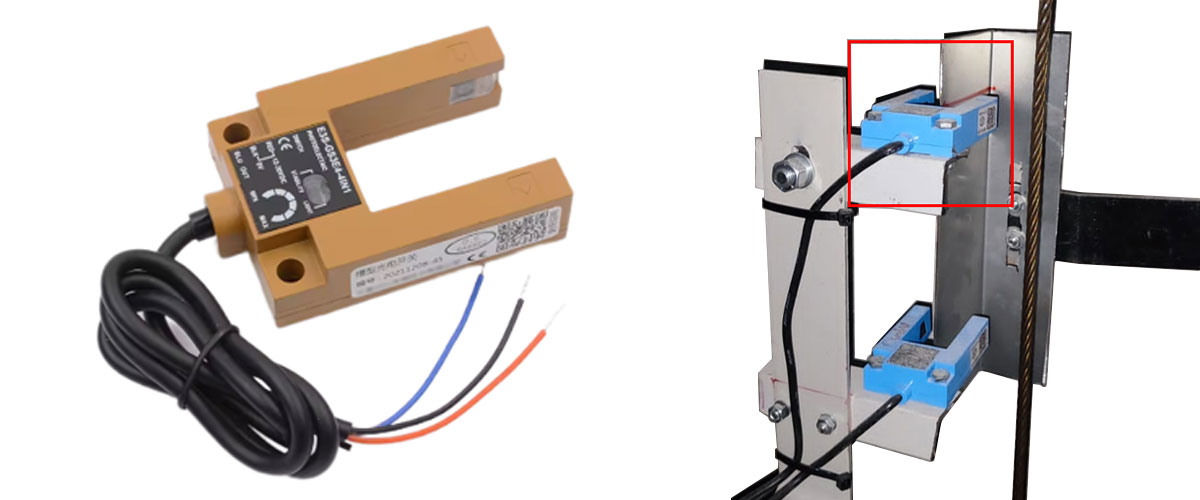
The working principle of the photoelectric switch is based on the photoelectric effect. A typical photoelectric switch consists of two main parts: an emitter and a receiver. During operation, the emitter continuously sends out a beam of light toward the receiver.
When the elevator arrives at the designated floor, the photoelectric switch is triggered. The light emitted by the emitter will be blocked or scattered, and the receiver detects the change in the light signal. This optical signal is then converted into an electrical signal and processed by the circuit to determine whether the light beam has been interrupted. Based on this signal, the elevator control system can accurately confirm that the elevator has reached the specified floor.
In most elevator installations, four leveling photoelectric switches are typically mounted around the elevator car — at the upper, lower, left, and right positions. This arrangement ensures reliable detection and accurate leveling during elevator operation.
Additionally, the electrical configuration of the photoelectric switch can be identified through the circuit diagram on the product label, which indicates whether the switch is Normally Open (NO) or Normally Closed (NC). Understanding these configurations helps technicians correctly integrate the device into the elevator control system.
As a key sensing component, the elevator leveling photoelectric switch plays an important role in ensuring precise floor positioning, smooth operation, and overall elevator safety. Regular inspection and proper installation are essential to maintain its optimal performance.
E-mail: yqwebsite@eastelevator.cn
Post time: Mar-06-2026